


If you run any sort of education nonprofit, you really should be looking into whether your organization could benefit from a Scholarship Granting Organization (SGO).
Why? Because there’s a lot of money potentially at play, and there are very few parameters on what might qualify.
Let me back up. Last year’s federal tax bill created a new tax credit scholarship program for this current tax year, and it’s EXTREMELY generous. If you need a primer on the program, see this piece from Joshua Dwyer—>

Anyone who donates to an SGO will receive a dollar-for-dollar credit up to $1,700.1 That is, if you donate $1,700 you will reduce your taxes by $1,700. Even if you don’t itemize your taxes, you can still reduce your tax bill dollar-for-dollar.
That’s a big deal, and that’s far more generous than the way the tax code rewards other types of charitable giving.
Ok, but isn’t this just for private schools? No, no it is not. The money can be used for any “qualified elementary or secondary education expense.” What is a “a qualified elementary or secondary education expense?” Here’s the relevant code language:
The term “qualified elementary and secondary education expenses” means—
(i) expenses for tuition, fees, academic tutoring, special needs services in the case of a special needs beneficiary, books, supplies, and other equipment which are incurred in connection with the enrollment or attendance of the designated beneficiary of the trust as an elementary or secondary school student at a public, private, or religious school,
(ii) expenses for room and board, uniforms, transportation, and supplementary items and services (including extended day programs) which are required or provided by a public, private, or religious school in connection with such enrollment or attendance, and
(iii) expenses for the purchase of any computer technology or equipment or Internet access and related services, if such technology, equipment, or services are to be used by the beneficiary and the beneficiary’s family during any of the years the beneficiary is in school.
Clause (iii) shall not include expenses for computer software designed for sports, games, or hobbies unless the software is predominantly educational in nature.
So far most of the public activity has been on the school voucher / private school choice side, but read through this list again. It specifically includes public schools. It specifically calls out tutoring. The phrase “supplementary items and services (including extended day programs)” opens the door to a wide variety of expenditures. It’s a very broad list.
So, we have a very generous incentive on the donation side, plus a very flexible rule on the spending side. That’s a recipe for a bonanza.

Who can benefit? And who can run an SGO? The Treasury Department is still drafting regulations to implement the new law, but the law itself sets few parameters on how an SGO must operate:
- It must be a nonprofit;
- It must allocate at least 90% of its revenues toward scholarships;2
- It must verify the income of the scholarship recipients;3
- It cannot allow donors to steer funds directly to particular students; and
- It must award scholarships to more than 10 students who do not all attend the same school.
This list is not very onerous. If you run a school system, it’s possible your community foundation could operate an SGO and give out afterschool or summer program scholarships. If you already run a summer or tutoring program, your organization could probably benefit. Any community group that provides before- or after-school programming, such as a church, a YMCA, etc. could potentially benefit. And any charitable organization that already raises money for these types of activities (think American Way) could launch its own SGO and offer its donors a more tax-efficient way to give.
I’m probably not being creative enough here.
Now, an SGO can only award scholarships in states that officially opt into the program. There are a lot of political questions there. Some Democrats (rightly) fear that this program will supercharge private giving. As currently constructed, it has very few accountability safeguards and may or may not let states set their own oversight rules. We’ll have to wait and see exactly where the Treasury regulations land.
But if you’re a state policymaker, you should be prepared for a LOT of people who could potentially benefit. Any accountant worth their salt will be recommending their clients take advantage of this credit. I suspect TurboTax and H&R Block will be looking into this as well.
And now that this program has been created, anyone who’s even peripherally involved in serving school-age kids should be looking into how they can make it work for them.
Gerrymandering Lobster Claws
I’m not a fan of gerrymandering. A few years ago, I supported a constitutional amendment in my home state of Virginia to move to a nonpartisan districting process.
If you’ve been following the national political news, you may have seen that Democrats in the state legislature are trying to create a new congressional map. In a state that is currently 6-5 in favor of Democrats, the new map could potentially lead to a 10-1 map in favor of the Dems.
They get there by squeezing every Democratic vote in northern Virginia and creating some pretty crazy-looking maps. Here’s what it would look like for my district. You can see my current district, shaded in purple at the far right. The new map would carve out an entirely different footprint (in black).
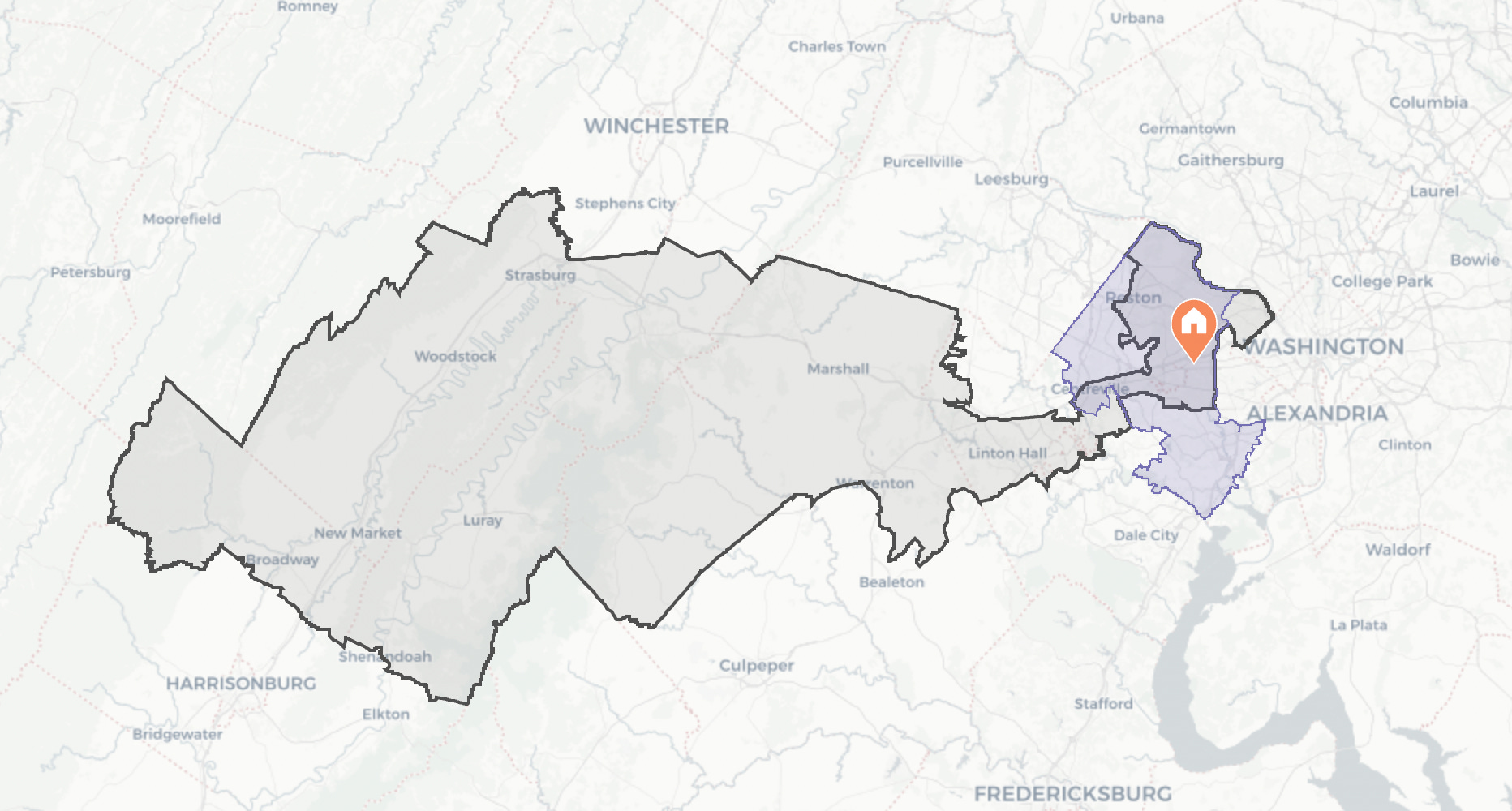
That picture doesn’t do the full map justice. Consider the proposed “lobster” district. Again, the purple is the current district and the black is the proposed new version:
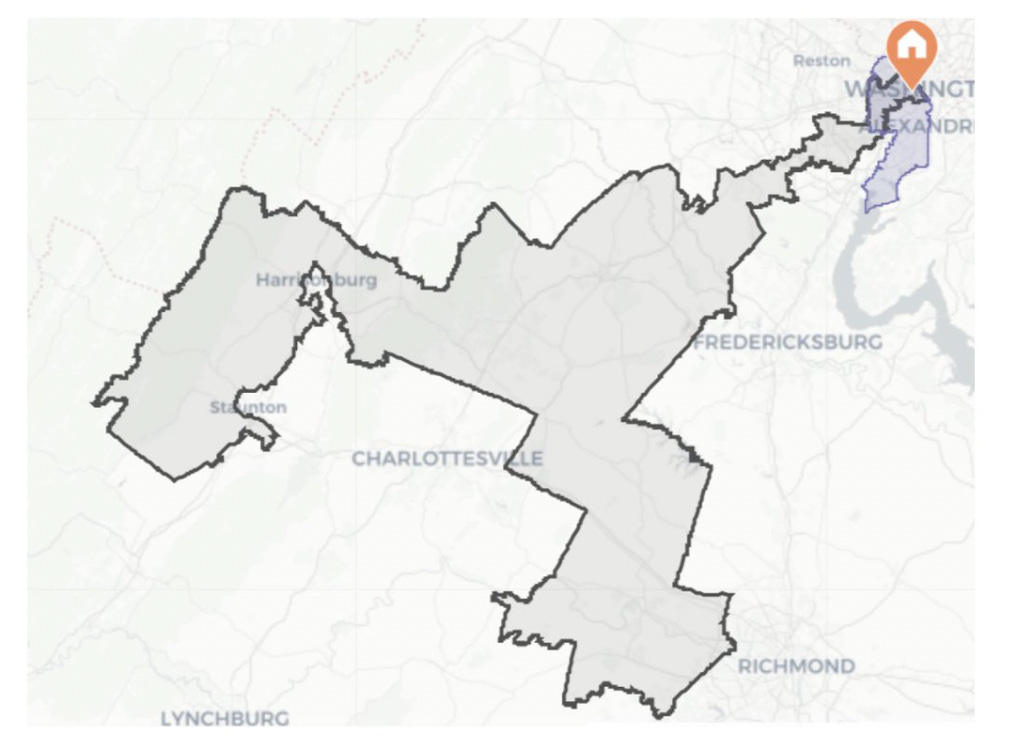
Needless to say, if the Democrats’ redistricting plan makes it past the legal challenges and goes to a public vote later this spring, I will be voting no.
Reading List
Jude Schawlbach: Open enrollment is increasingly popular
Jessica Baghian: “Every state is a local control state. And still, every state has levers they can pull to improve outcomes for kids.”
Helen Baxendale: What American Education Reformers Can Learn from England
Beth Akers: “[Higher education] debt cannot simultaneously be a life-ruining burden and an essential tool that students must have unlimited access to.”
Some commenters have suggested that the way Congress wrote this provision means it should actually be $1,700 per person and allow a married couple to donate up to $3,400.
The Treasury will define exactly what this means and if it applies to the organization’s total revenue (which I doubt) or just the SGO part.
Recipients must come from a family earning less than 300 percent of the “area median income.” In Fairfax, VA where I live, the max cutoff is $491,700!