

My Family Exercised School Choice. (We Moved.)
When education policy hits home

We exercised our school choice recently. That is, we moved.
We had been in our old place for a long time. We loved our neighbors, and our mortgage was low. But it happened to be a natural transition year. My youngest is entering middle school, and my oldest is about to start high school.
And as we went looking into our options, we were confronted with a pretty harsh reality. We happened to be zoned for a school that has a “4” rating on GreatSchools. More galling, we lived at the very tip of high school district zone, and there were five other high schools within reasonable driving distance that all had higher ratings. Two are rated as “6s” on GreatSchools’ scale, and three are rated as “9s.”
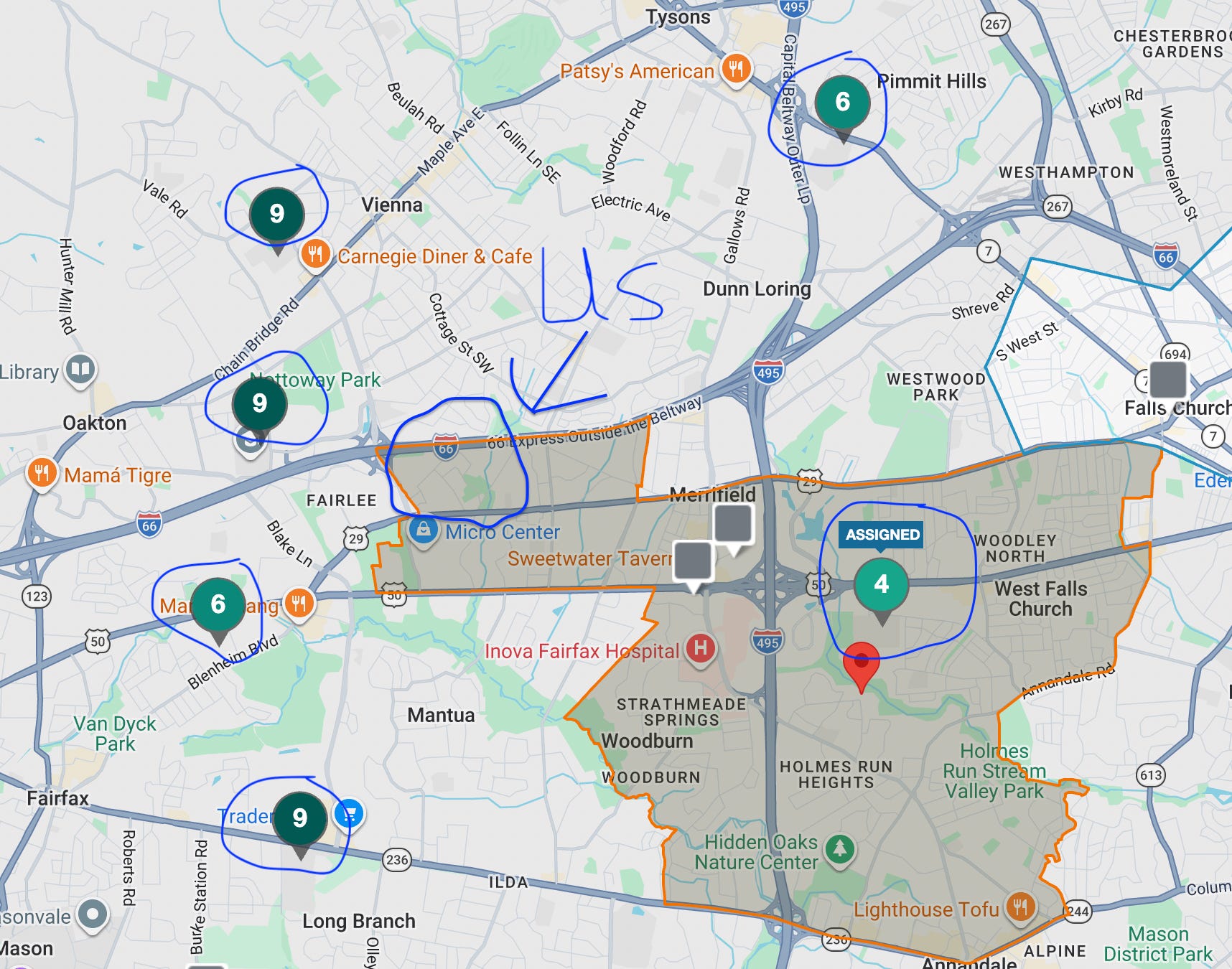
So we moved. Not far, mind you. But we paid more money to upgrade to a nicer townhouse so we could officially be in one of these other zones.
I feel a bit guilty about all this, but I also recognize my privilege. And by writing this publicly I hope that other people who are making similar decisions can understand what it is that we’re doing and consider how this system affects people with fewer resources.
My friend Brian Kisida wrote about this issue for The 74. He noted that some critics resist choice politically while exercising it for their own kids through private schools or expensive homes in ‘good’ districts. He writes:
For lower-income families, access to better schools through the housing market is often out of reach. Policies that expand school choice — charter schools, vouchers or open enrollment — are among the few mechanisms that allow these parents to exercise the kind of educational agency that affluent families already enjoy. The real debate over school choice is not whether it should exist, but who gets access to it.
Choice critics argue that the focus should instead be on improving traditional public schools. For students assigned to underperforming schools, this means waiting indefinitely for reforms that may never arrive, while viable alternatives are blocked. It also assumes that equalizing school quality is both feasible and sufficient — a concept at odds with decades of uneven reform and a large body of evidence showing that peers and community environments shape long-term outcomes.
Now, I work in education policy. I’ve spent a lot of time looking at GreatSchools’ rating scale, and professionally I’ve worked on accountability and other rating systems. Given the weight of the evidence, I’m quite confident that our kids would have been fine at their old school. Maybe they would have even benefitted from a “big fish in a small pond” effect. But we had the means to buy our way into a nicer school, so we did.
This is how most families exercise school choice here in the USA. School choice isn’t some fringe policy experiment. It’s already the dominant system for families with money. We just don’t usually call it that. If families have the money, they can choose which school district and even which school zone they want to live in. My parents did it for me when I was a kid, and now I’ve done it for my own kids.
Reading List
Jorge Elorza: Ten Reasons Why Democrats Should Support the Federal Scholarship Tax Credit
Charlie Barone: Why New Jersey should consider the federal scholarship program
Greenberg-Ellis and Pimentel: Connecticut Charters Break Through in Historic Legislative Session
NWEA study: Most kindergartners who start school behind never reach proficiency
We just did it too, Chad - we own a low mortgage house in a 9/10 (per Great Schools) high school zone, but middling elementary and middle schools. My middle 2 kids were unexpectedly not doing well in private school and both needed to transfer to public school, so we rented out our house and moved into a rental in a highly-resourced district just outside Austin (Eanes ISD). While I believe that some schools may be better than they seem on paper, especially depending on which teachers you get, I had had a call (off the record) with the counselor at previously zoned school and she told me point blank to figure out another option, that things were out of control in their kindergarten classes and that enrolling my child might well make him even more challenging.
This kind of zero-sum thinking always troubles me. Good schools are “scarce” so we have to limit access through zoning or lotteries or what have you. More magnets. More selective admissions. More policing district-drawn boundaries. More administrative burdens to filter out the undesirable children’s parents.